Urban regeneration
Ex Caserma Alfieri-Cella
Reimagining a former military site as a hub of creativity and inclusion.
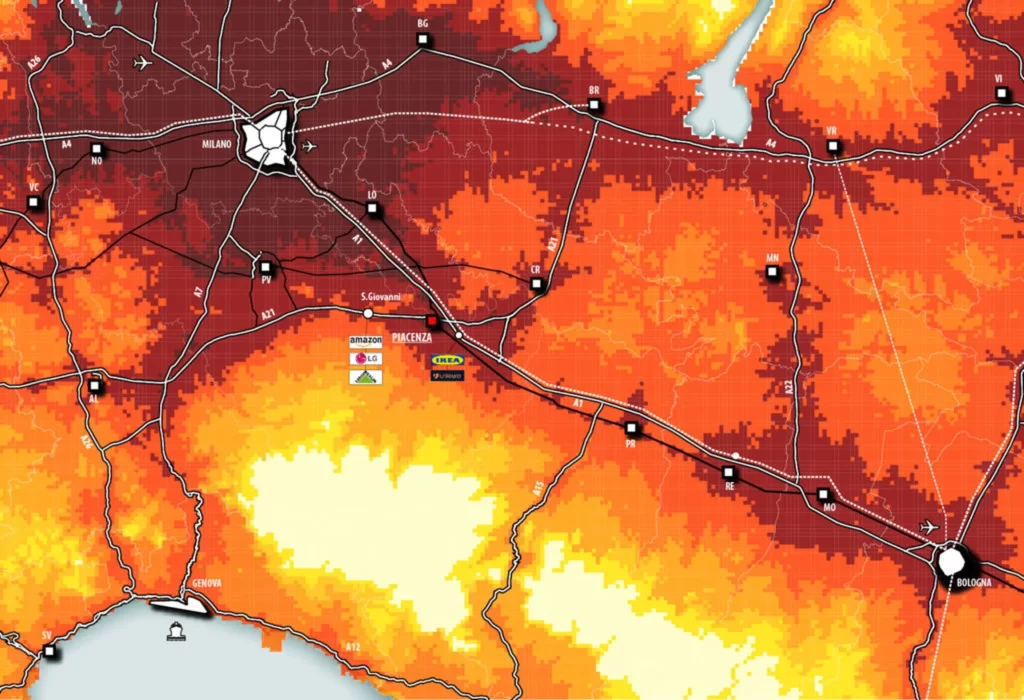
Piacenza has always been a crossroads. Since Roman times, this city has been the gateway between the Alps, the coasts and the South — first by land and river, now by highways and rail lines. Even today, Piacenza is at the heart of Northern Italy’s logistics game: big names like IKEA, Amazon, Whirlpool, Leroy Merlin, DHL and Unieuro have chosen it as the perfect spot for their distribution hubs. And with fast trains cutting travel time to Milan to just 45 minutes, Piacenza is becoming almost an extension of the Milanese metropolis.
But there’s more to Piacenza than warehouses and trucks: the city is home to a unique military heritage. Over the years, this has shaped the urban landscape with historic barracks and grand cloisters that now need a new purpose — one that celebrates history while opening the doors to tomorrow.
Our project breathes new life into two former monasteries turned military barracks. It’s urban regeneration that goes beyond glossy renderings: it’s about conserving heritage, cutting waste and rethinking spaces with creativity and care. Instead of demolishing and building from scratch — wasting resources and erasing stories — we choose to reuse and transform what’s already here. It’s about reducing CO2, protecting the memory of place, and giving buildings a chance to tell a new story.
Architectural design here becomes the bridge: between planning constraints and market demand, history and future. Thanks to a deep understanding of real estate, we’ve mapped out a step-by-step transformation. At first, temporary, low-cost uses — think open-air concerts, street food markets and art festivals — bring people in and spark curiosity. And as the area gains new energy and visibility, bigger regeneration works can begin with lower financial risk.
Imagine it: where soldiers once slept in endless rows of bunk beds, there’ll be co-working spaces, student housing and start-up incubators. Former military garages will become bars and restaurants buzzing with life. Renaissance cloisters, once walled off, will become playgrounds for children and open courtyards for everyone to enjoy. Under the vaulted monastery ceilings, we’ll host a fashion school, live music and contemporary art shows.
For us — as architects, planners, and citizens — this is what regeneration means: not just changing how a place looks, but shifting its role in people’s lives. Protecting what matters, reimagining what can change, and making sure cities stay as diverse and resilient as the people who live in them.