
sailing designers
What can sailing teach us in order to improve the way we acquire, manage and deliver projects?
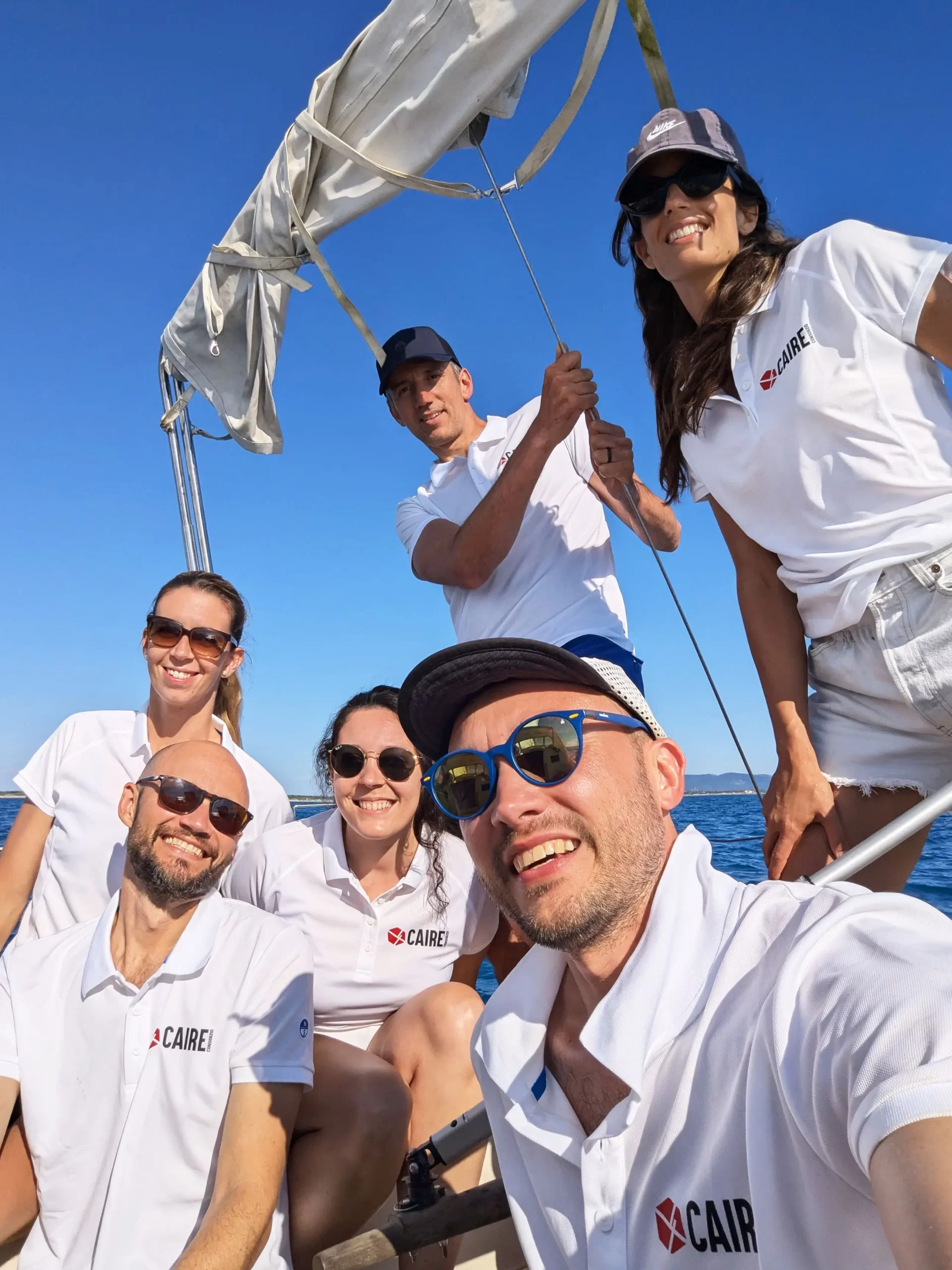
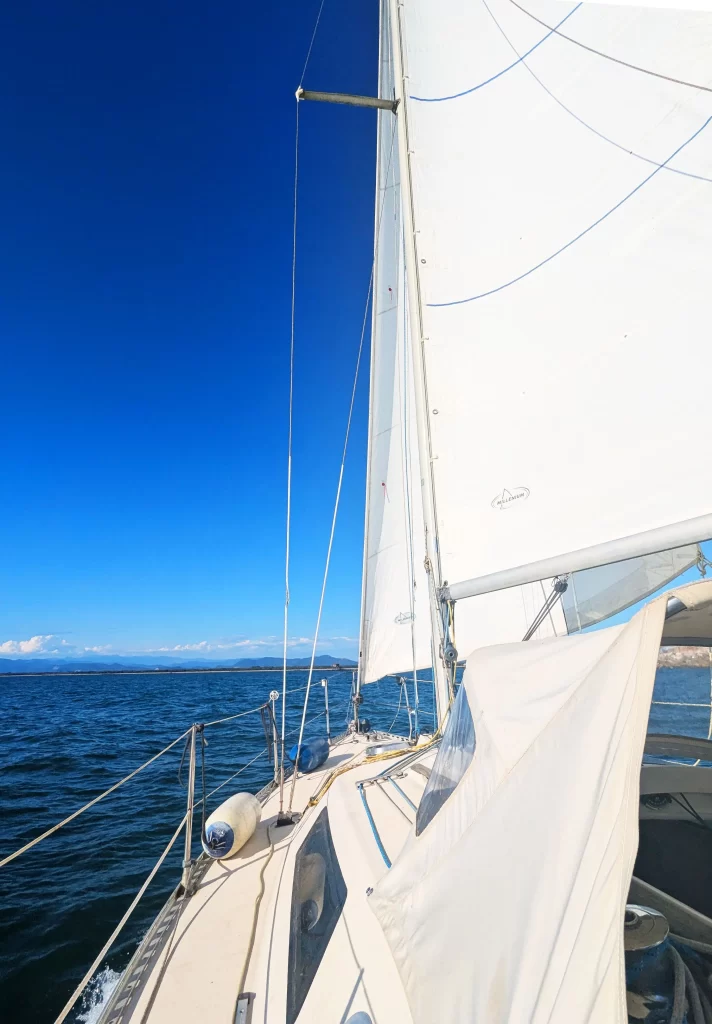
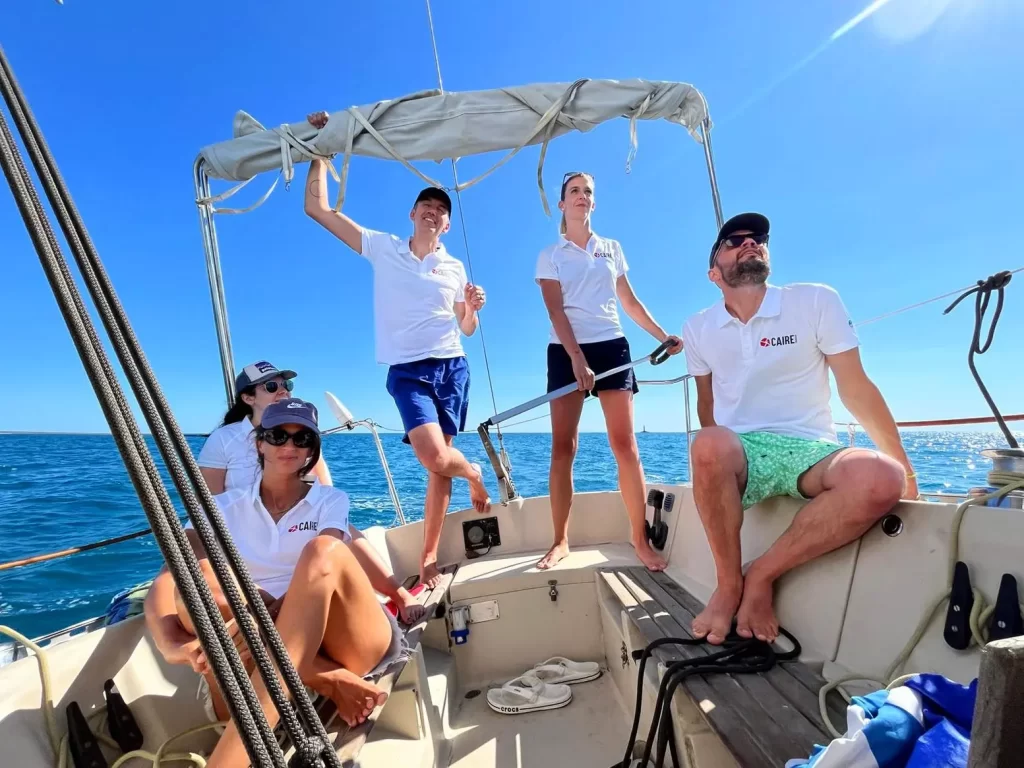
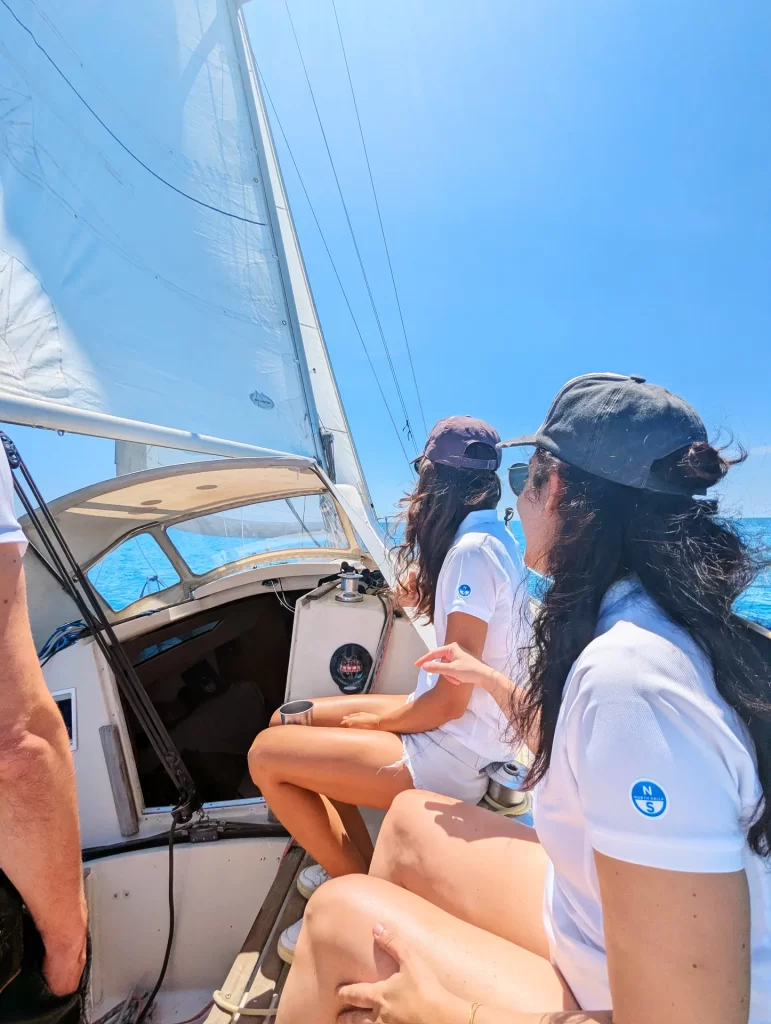
Earlier this month, our design and marketing team shared a rather exciting team building experience: sailing a 28′ Beneteau First yacht off the Tuscan coast for a day of full immersion in nature and blue sky thinking.
Among the many metaphors linking sailing a yacht and running an architectural design practice, four seemed particularly apt.
1. Language
Why is sailing language so complicated? The Italian word for bucket is “secchio”, how on Earth could such a simple and straight forward noun get so distorted to get re-written as “bugliolo” in nautical slang? Same comment may be raised for climbing gear terminology, construction tools or any specialised technical equipment. Language gets sharper and more exclusive the higher the risk. In fair weather sailing the richness of sailing terms might seem like an outdated fuss from ancient times, yet, as soon as weather or sea conditions get slightly more interesting, being able to instruct a precise manoeuvre can be life-saving. “Ease the mainsheet” is a much more effective piece of communication compared to “please could you relase a bit that thick black rope that restrains the rotation of the big horizontal thing attached to the massive vertical pole planted in the middle of the boat?”
2. risk
Closely related to language is the notion of risk at sea along with the various risk management strategies, behaviours and habits. A sailboat is a bit of a world on its own. A crew has to plan and managed food and water, check the weather, maintain engine, plan the passage, verify heading and course over ground whilst keeping all systems onboard in good functioning order. The sense of fun and freedom one enjoys when sailing into the sunset heading towards a dream island can only be achieved through the careful application of safety protocols and self discipline. Not only risk is initially estimated and mitigated before setting sails through the very action of checking nautical charts, weather forecast, tidal patterns and planning the route but risk is constantly monitored whilst sailing through passage logs, chart plotting and asking your crew if they need another breadstick. As the practice of risk management becomes second nature, fun can begin. Freedom is a form of discipline, after all.
3. governance
One logical step away from Risk is Governance. Sailing allows to experience a multitude of different governance structures, seamlessly flowing one into another depending on the specific moment, action and purpose. The lower the risk, the more fluid and flat the governance structure. The higher the risk, the more clearly defined ranks and the chain of command. Deciding which bay in the island to explore to drop anchor and enjoy a swim may well be a shared decision – obvioulsy with an eye on sea floor conditions and the weather on the other hand instructing to reef down all sails as the weather is closing in is necessarily a top down message from the skipper to the bowman and the rest of the crew on deck.
4. purpose
Just like our goal as architect and designers goes beyond the finished building’s photoshoot or the end of the year financial report, the essence of sailing goes beyond sailing. Whether one seeks the competitive edge of regattas or the calming beauty or summer cruising the purpose of sailing is a rather Zen affair. It is about filling our actions with purpose, to enrich our perception with presence and, last but not least, to share the marvel of life and evolution in synergy with fellow living beings – whether dolphins or sea gulls whilst sailing or design team colleague at work.